Your Wrist Is a Thermostat: The Winter Shower Habit That Saves Your Skin
The first real cold snap hits, the forced-air heat kicks on, and suddenly your shins feel like sandpaper. You do the natural thing: crank the shower as hot as you can stand it. It feels amazing for about eight minutes. Then you step out, towel off, and spend the next hour trying not to scratch your forearms.
That cycle is common in winter, and it is not just about the weather outside. It is about what hot water and long soaks do to the outer layer of your skin—and how quickly you can undo some of the damage with a simple pre-shower check and a short post-shower window.
Why Hot Water Feels So Good—and Why Your Skin Protests
Your skin barrier is a bit like a brick wall. Skin cells are the bricks, and lipids—ceramides, cholesterol, and fatty acids—act as the mortar. That mortar helps hold water in and irritants out. Hot water and long exposure to soap can weaken that setup. The heat feels soothing, but it can strip away some of the lipids that keep skin flexible and calm.
Add low indoor humidity from furnaces and space heaters, and the barrier has less support. The result is often tightness, flaking, and that itchy, prickly feeling after a shower. Scratching makes it worse, which is why winter itch can become a loop.
None of this means you need to take cold showers. It means the goal is warm enough to be comfortable, not hot enough to fog the mirror before you get in.
The 10-Second Wrist Test
Before you step into the shower, turn the water on and let it run over the inside of your wrist for about 10 seconds. The inner wrist is sensitive and easy to check. If the water makes you want to pull your hand away, or if the skin turns pink quickly, it is too hot. If it feels pleasantly warm—not neutral, not stinging—you are in the right range.
Think of it as calibration, not a medical test. You are not measuring a fever. You are checking whether the water is stripping your skin barrier every morning. Many dermatologists suggest lukewarm water for dry or itchy skin, and lukewarm is usually cooler than people expect. A steamy bathroom is cozy, but steam is a clue that the water is hotter than your skin really needs.
One practical trick: set the shower dial where you think you want it, then nudge it down a quarter turn. Most people adjust within a few days.
Build a Shower That Doesn't Leave You Itchy
A few changes make lukewarm water feel less like a sacrifice.
- Keep it short. Five to eight minutes is plenty for most people. Long soaks are the bigger issue for many dry-skin sufferers, especially in winter.
- Warm the bathroom, not the water. A space heater or a warm towel can make a cooler shower feel less harsh.
- Use a gentle, fragrance-free cleanser. Harsh bar soaps and heavily scented body washes can be more irritating. Look for terms like gentle, mild, or soap-free. You do not need a fancy product; a bland cleanser from the drugstore is fine.
- Don't soap every inch every day. For many people, washing the armpits, groin, feet, and hands is enough on non-workout days. Rinse the rest with water.
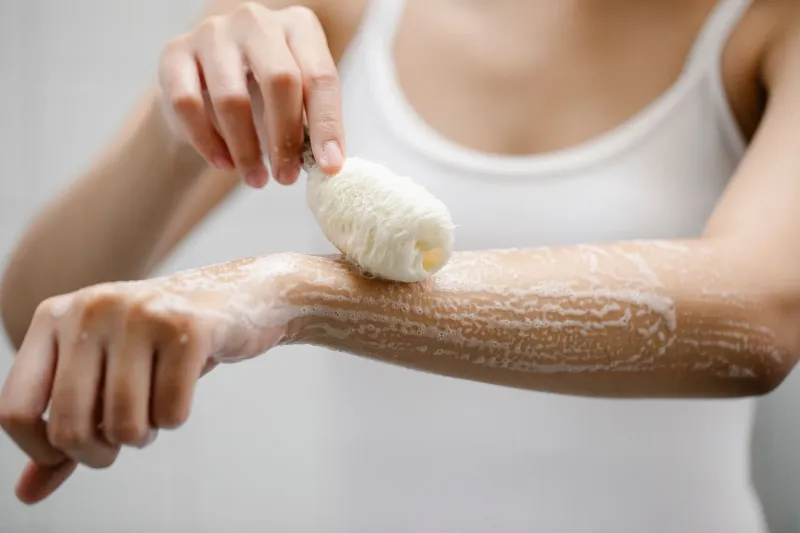
- Skip the scrubby tools. Loofahs, brushes, and rough washcloths can add friction. Your hands are enough.
If you have eczema, psoriasis, or very reactive skin, your clinician may recommend a specific cleanser or treatment. The basic principle still applies: less heat, less time, less stripping.
The Three-Minute Moisturizer Window
Here is where winter skin habits often fall apart. People moisturize at night, or whenever they remember, but not right after a shower. Dermatology guidance generally favors applying moisturizer to damp skin after bathing because it helps trap water before it evaporates.
The practical version: pat dry instead of rubbing, leave your skin slightly damp, and apply your moisturizer within about three minutes of stepping out. That is not a magic countdown, but it is a useful habit marker. It keeps you from getting distracted by your phone, the dog, or the laundry.
For winter, a cream or ointment usually beats a thin lotion. Look for ingredients such as glycerin, petrolatum, ceramides, squalane, or colloidal oatmeal. Fragrance-free is a safer bet for itchy skin. You do not need to spend a lot. A thick, plain moisturizer applied consistently is often more useful than an elegant product applied occasionally.
Pay extra attention to shins, forearms, hands, and any patches that crack or sting. If your hands feel dry after washing, keep a tube by the sink.
A Realistic Winter Routine for US Households
You do not need to overhaul your bathroom. Try this sequence:
- Before showering, run the water over your inner wrist for 10 seconds. Adjust until it is comfortably warm.
- Keep the shower under eight minutes. Use a gentle cleanser where you need it.
- When you get out, pat dry and leave a little moisture on your skin.
- Apply moisturizer within three minutes, while the bathroom is still steamy and your skin is damp.
- Run a humidifier in the bedroom or main living area if your indoor air feels bone-dry. Aim for about 30% to 50% indoor humidity, and clean the humidifier regularly.
- Wear soft layers against your skin. Wool and rough synthetics can irritate dry patches, so put a cotton layer underneath.
Small adjustments add up. You are not trying to take the pleasure out of a winter shower. You are trying to keep the barrier intact so your skin stops sending itch signals all day.
When Itchy Skin Deserves a Professional Look
Dry winter skin is common, but not all itch is simple dryness. See a clinician if you have cracks that bleed, a spreading rash, severe itching that disrupts sleep, or skin that does not improve after a couple of weeks of gentler showering and consistent moisturizing. Eczema, psoriasis, and other conditions often need targeted treatment.
The wrist check takes ten seconds. The moisturizer window takes three minutes. Together, they turn a small winter habit into a lot less scratching.