The 30-Second Colander Trick That Makes Canned Beans a Little More Blood-Pressure-Friendly
Canned beans deserve more credit than they get. They are shelf-stable, cheap, fast, and packed with fiber and plant protein. The catch is the liquid in the can, which often carries a noticeable amount of added sodium. If you are trying to eat in a more blood-pressure-friendly way, that salty splash can add up faster than you think.
The good news: you do not need to soak, simmer, or perform kitchen alchemy. A colander, a sink, and about 30 seconds will do more than most people realize.
Why Rinsing Helps (and Why It Is Not Magic)
When beans are canned, they sit in a brine that includes salt. Some of that sodium stays in the bean itself, and some stays in the liquid. Pouring off the liquid removes a chunk of it. Rinsing the beans under running water removes more.
Studies that have tested canned beans generally find that draining and rinsing can reduce sodium by a meaningful percentage, though the exact number depends on the bean, the brand, and how thoroughly you rinse. This is not a license to eat three cans a day and call it a health food. It is simply a low-effort upgrade.
What you are not doing is stripping away the good stuff. The fiber and protein largely stay put. You are mostly washing away surface sodium and the starchy canning liquid. That is a trade worth making.
The Technique: Drain, Rinse, Shake
Here is the whole routine:
- Open the can and pour it into a colander. Do not save the liquid unless a recipe specifically calls for it. In most weeknight cooking, it is just salty starch water.
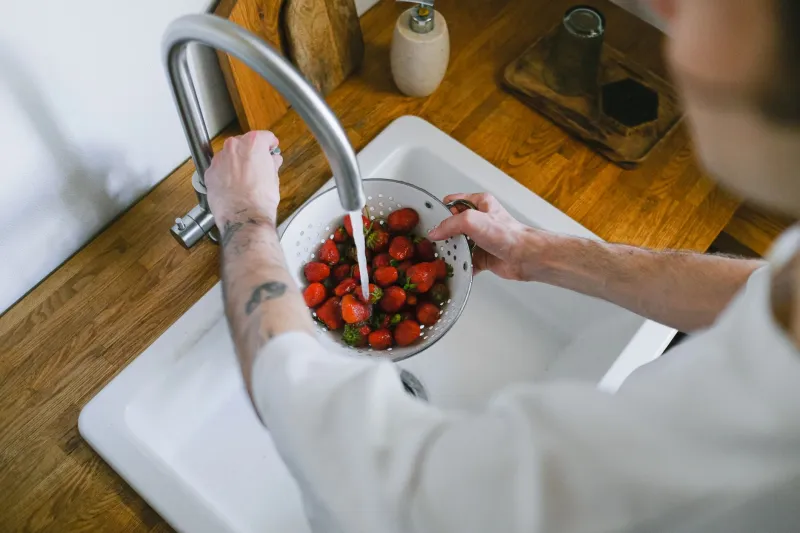
- Give the beans a quick rinse under cool running water. Thirty seconds is plenty. Use your hand or a spoon to move them around so the water hits more surfaces.
- Shake the colander a few times. You want the beans to be damp, not dripping. Excess water can make a skillet meal soupy.
- Pat dry if you are roasting or pan-frying. For salads and bowls, a little moisture is fine. For crispy beans, spread them on a towel for a minute.
Do not soak the beans in a bowl of water for an hour thinking you are doing a better job. A long soak can make them waterlogged and mealy, and it does not remove dramatically more sodium than a good rinse. The sink-and-colander move is the sweet spot.
When to Skip the Rinse and Buy No-Salt-Added Cans
Rinsing helps, but it does not make a high-sodium can disappear. If you are watching sodium closely, look for cans labeled no-salt-added or low-sodium. These are increasingly common in US supermarkets, and they are worth the small price difference if beans are a regular part of your week.
A few practical notes:
- No-salt-added beans still need draining. The liquid may not be salty, but it can be starchy and thick. Rinse anyway for better texture.
- Low-sodium is not sodium-free. Check the label. A can that says low-sodium can still contribute a fair amount if you eat the whole thing.
- Compare the per-serving numbers, not the front of the can. The Nutrition Facts panel is the honest part of the package. Look at sodium per serving and how many servings are in the can.
- If you are using the bean liquid for a recipe, you are keeping some of the sodium. That is fine occasionally, but do not assume rinsing later will fix it.
Rinsed Beans Are a Weeknight Shortcut, Not a Project
The point of rinsing is not to turn dinner into a chemistry experiment. It is to make a convenient food a little more everyday-friendly. Once the beans are drained and rinsed, they are ready for almost anything.
Try these US-friendly moves:
- Taco night: Mash rinsed black beans with a little cumin and lime, then warm them in a skillet. Use them in tacos, burrito bowls, or quesadillas.
- Sheet-pan dinner: Toss rinsed chickpeas with olive oil, paprika, and garlic powder, then roast at 425°F until crisp. Add them to a bowl with greens and roasted vegetables.
- Pasta e fagioli, fast: Simmer rinsed cannellini beans with crushed tomatoes, garlic, rosemary, and small pasta. Finish with a drizzle of olive oil.
- Cold lunch: Toss rinsed kidney beans with chopped cucumber, tomato, red onion, and a simple vinaigrette. Add a scoop to a lunchbox or serve over greens.
- Breakfast: Warm rinsed black beans with salsa and a fried egg. It is a filling start that does not require a lot of salt to taste good.
The Bigger Picture: Small Sodium Cuts Count
Blood pressure is not managed by one heroic meal. It is managed by the sum of small choices: what you put on the plate most days, how often you cook at home, and whether your convenience foods are doing double duty as salt delivery vehicles.
Rinsing canned beans will not lower your blood pressure on its own. But it is the kind of small, repeatable habit that makes a pantry staple a little more useful. You keep the fiber. You keep the protein. You lose some of the salty liquid. And you still get dinner on the table in less time than it takes to decide what to order.
So the next time you crack open a can of beans, give them a quick trip through the colander. It is not a cure-all. It is just a smart default.