Give the Flask a Head Start: The Lunch-Packing Move That Keeps Soup Hot Till Noon
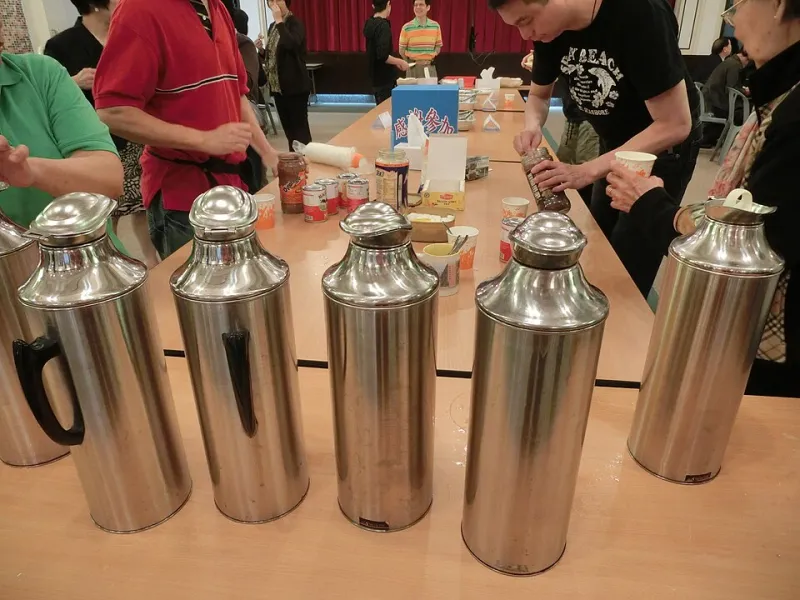
Photo: Ewloskalw, CC BY-SA 3.0, via Wikimedia Commons
There is a special kind of disappointment that comes from opening a lunch thermos in January and finding soup that is merely warm. Not hot. Not cold. Just tired. The usual fix is to heat the food longer, but the container itself is often the culprit. A vacuum-insulated flask does not create heat; it only slows the escape. If the inside starts cold, it steals heat from your lunch before the lid is even screwed on.
That is where the two-minute preheat comes in. It is not a gadget, a purchase, or a weekend meal-prep project. It is a small step that makes the flask do its job better, and it happens while the soup is already on the stove.
Why a cold flask works against you
Think of the thermos as a heat sponge. The stainless steel walls and the air inside the empty flask are at room temperature, which in a US kitchen in November might be around 68°F to 72°F. When you pour in food at 180°F, some of that heat immediately goes into warming the container. The food drops a few degrees before the lid is even on. Over the next four or five hours, it keeps dropping.
Preheating changes the starting conditions. Filling the flask with boiling water for a couple of minutes raises the interior temperature and pushes out the cool air. When you dump the water and add hot food, less energy is spent warming the container and more stays in the meal. The result is not just better-tasting soup. It is food that spends less time in the temperature range where bacteria multiply most quickly.
The food-safety reason to care
The USDA calls 40°F to 140°F the danger zone. Hot foods should be held at 140°F or above. Leftovers should be reheated to 165°F. Those numbers matter whether the food is on a buffet line or in a lunch bag under your desk.
A preheated flask does not guarantee perfect holding temperatures, especially if the food starts out lukewarm or the flask is cheap and leaky. But it buys time. Instead of your chili sliding into the danger zone by mid-morning, it has a better chance of staying in the safe zone until lunch. That is a practical win, not a guarantee, and it is worth pairing with a food thermometer at home until you get a feel for your own setup.
The two-minute routine
This works best when the soup is already simmering, so the timing lines up naturally.
- Boil water. Use an electric kettle or a small pot. You do not need a gallon, just enough to fill the flask.
- Fill the flask with boiling water. Fill it close to the top, then cap it. Let it sit for two minutes. This is a good moment to stir the soup or check that it is properly hot.
- Heat the food to 165°F or higher. If you are packing leftovers, reheat them until steaming and bubbling, not just until the microwave beeps. A quick-read thermometer takes the guesswork out.
- Dump the preheat water. Carefully pour it out, keeping your hands clear of the steam. Do not bother drying the inside. A little residual heat is helpful.
- Fill immediately with hot food. Fill it as close to the brim as is practical. Less air space means less heat loss. Cap it firmly and pack it right away.
That is the whole habit. Two minutes of waiting, one fewer lukewarm lunch.
Packing details that add a little more margin
A preheat is the headline move, but a few small choices support it. Start with a flask that fits your lunch bag snugly, and wrap it in a dish towel if the bag is thin. Keep the flask upright in transit. If you pack a side salad or yogurt, keep those separate and cold; do not try to make one container do two temperature jobs.
Also resist the urge to open the flask early. Every time the lid comes off, heat escapes. If you are tempted to check whether lunch is still hot at 10 a.m., remember that the answer is partly up to you.
Three meals that hold up well in a thermos
Beef and bean chili. Thick, dense, and forgiving. It holds heat well and does not slosh around. Reheat to a simmer before packing.
Lentil and vegetable soup. A sturdy plant-based option with enough body to stay hot. Avoid a very brothy soup if you can; thicker soups hold temperature better.
Chicken and rice stew. Think of a hearty chicken soup with rice, carrots, and celery. Cook the rice a little firmer than usual so it does not turn to mush by lunch. Add a squeeze of lemon at home, not in the flask.
Pasta can work, but it tends to drink the broth and soften over time. If pasta soup is the plan, keep the pasta slightly undercooked and pack it hot.
A small winter habit with a real payoff
The thermos preheat is not glamorous. It will not show up in a fitness tracker or a meal-plan app. But it is the kind of tiny kitchen habit that makes a cold-weather lunch feel intentional. You get hotter soup, better texture, and a wider margin against the danger zone. On a gray November day, that is a decent return on two minutes.
One caveat: if lunch has been sitting in a warm car or a heated office for hours and the food is barely warm when you open it, do not talk yourself into eating it. The preheat helps, but it is not a substitute for basic food safety. When in doubt, reheat or toss it.